

What was the situation?
J. Barton Construction is an established Coeur d'Alene contractor that, at the start of our work, was effectively invisible when buyers asked an AI assistant for a local builder, last among the tracked competitors in the market.
What did we do?
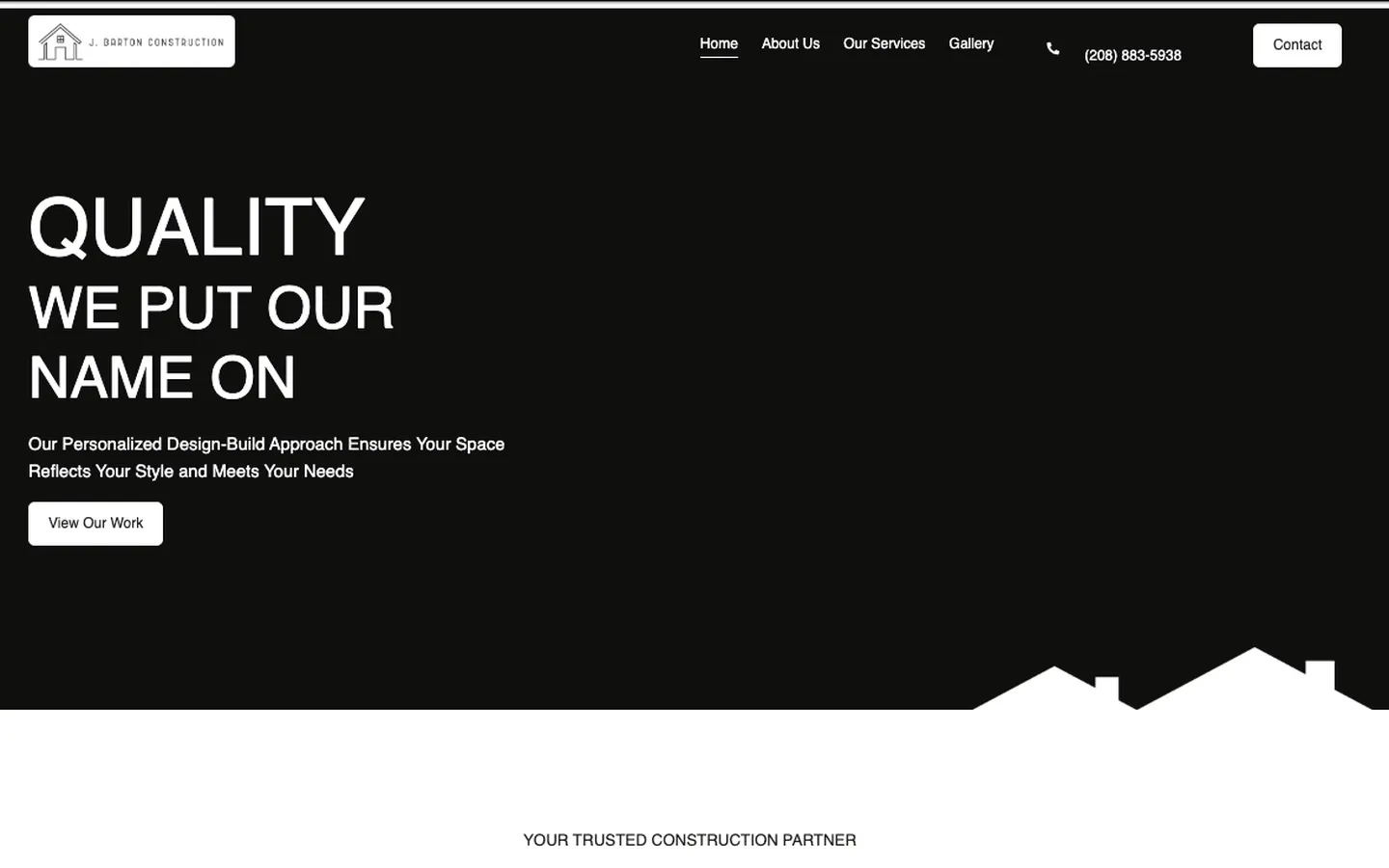
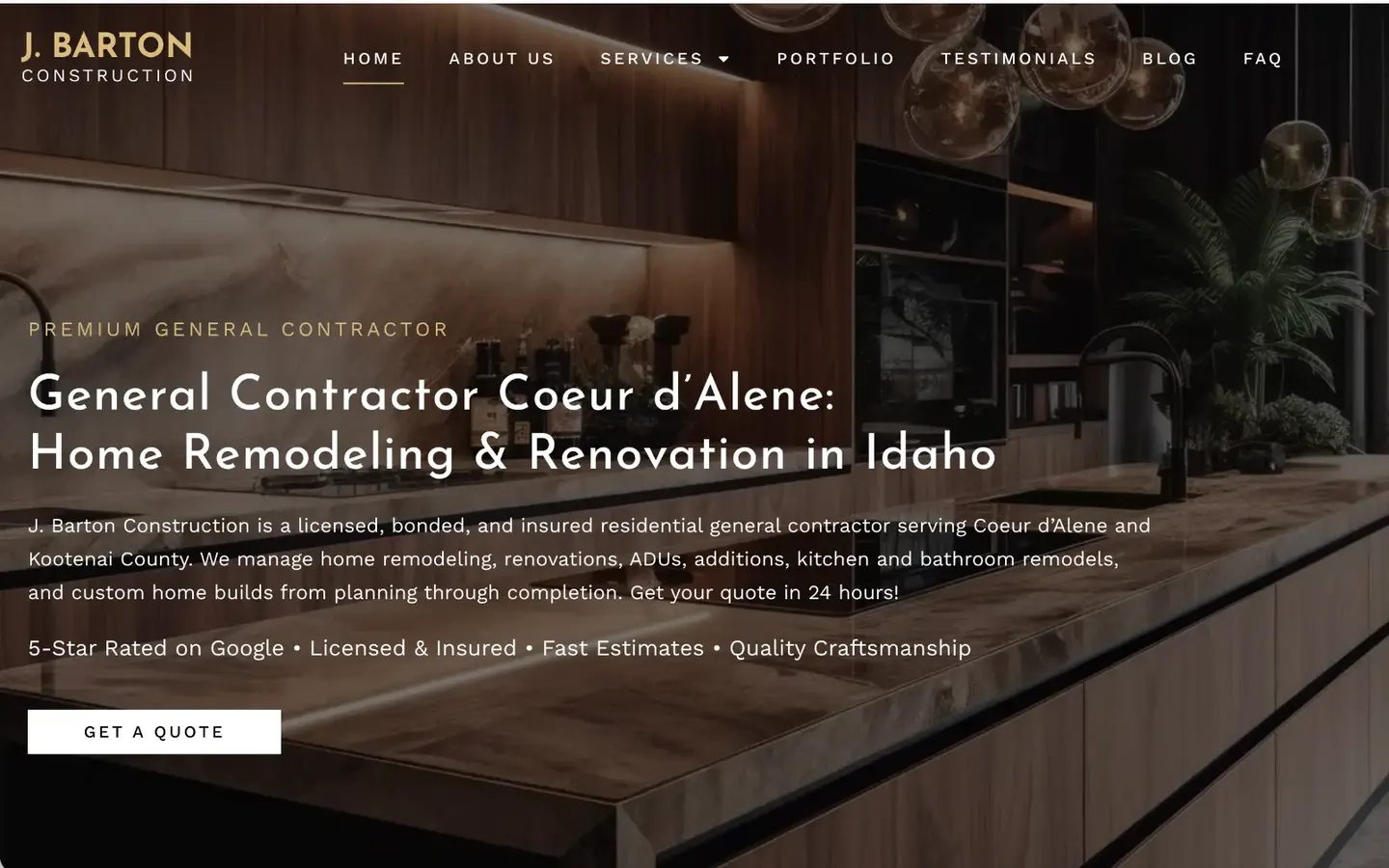
We rebuilt the site, drag the before and after to compare, then ran The Local Visibility System: consistent citations across the platforms AI trusts for builders, Houzz among them, a fully built Google Business Profile, content structured for AI assistants to read and cite, and website care.
Every month ends with an honest report that grades each commitment.
What were the results?
Over the engagement, J. Barton's AI Visibility Score climbed from 34 to 53, moving from last place among tracked local builders to #2, passing three other tracked builders and closing to within about six points of the leader in the measured set. Mention rate nearly tripled and average position improved.
We label the window honestly: the strongest figures are from the most recent week, and the proof is the shape of the whole period, a steady climb from April through August. That is the kind of trend our monthly report is built to show plainly.
The honest note
The #2 and 53 figures are from the most recent week, and a short window is naturally noisier. Across the full April to August span, J. Barton ranged roughly 43 to 50 and #4 to #5. The proof is the trend across the whole period, a steady, consistent climb, not any single week.
Method
The AI Visibility Score reflects presence across the five major AI engines, ChatGPT, Google AI Mode, Google AI Overviews, Gemini and Perplexity, for a recorded set of local contractor queries, scored 0 to 100 and benchmarked against other local builders, April to August 2026, measured in Surfer's AI Tracker. One client engagement, not a firm-wide average.
How the AI Visibility Score is measured →